Law is changing in ways that extend well beyond courtrooms and legislation. Technology is reshaping how legal information is researched, cases are prepared, and professionals handle the growing complexity of modern practice. At the same time, lawyers are being called upon to understand not only the law itself, but also the people, businesses, technologies, and social changes surrounding it. This shift is creating a profession where legal knowledge increasingly needs to work alongside curiosity, adaptability, and the ability to solve unfamiliar problems.
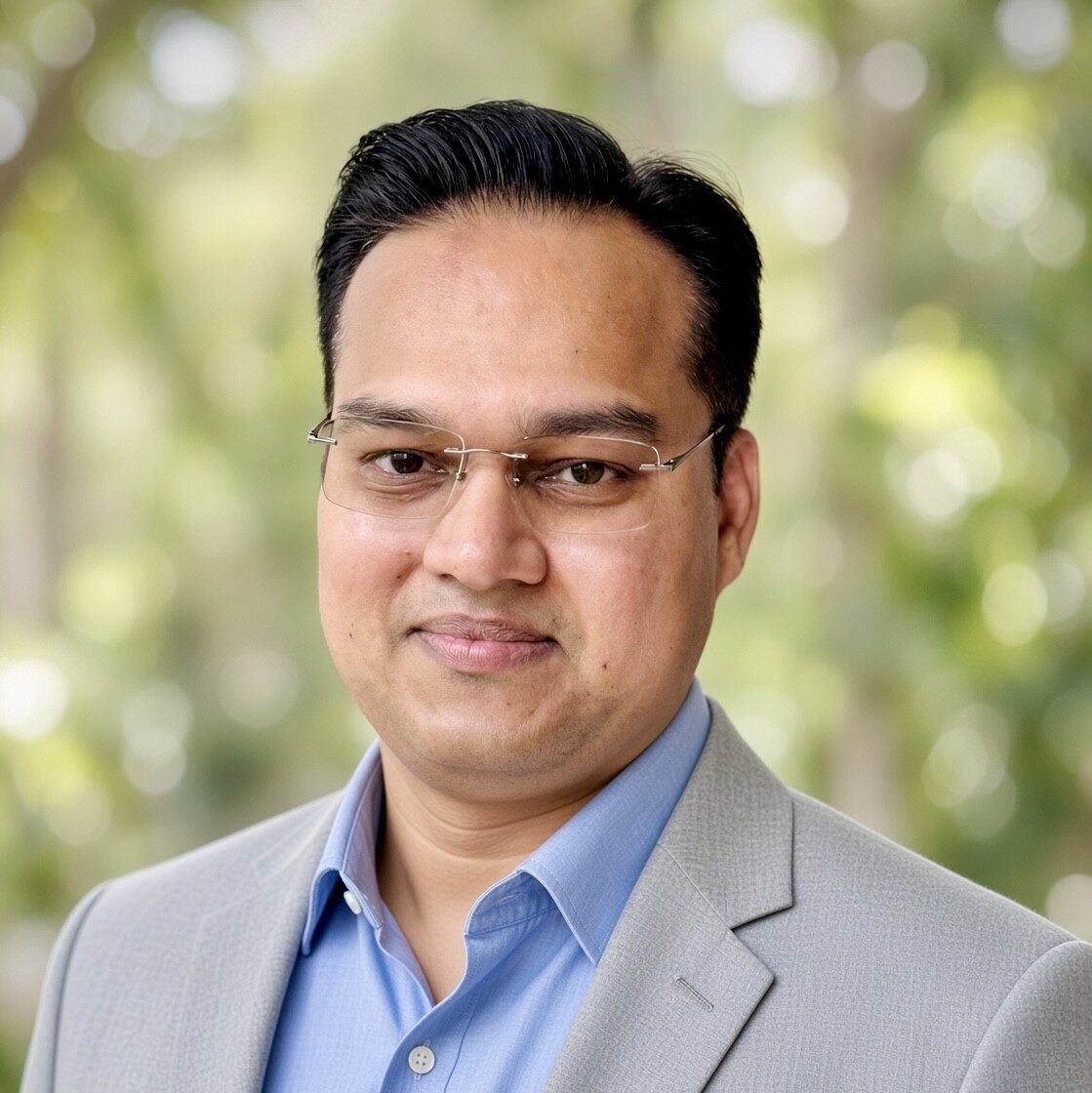
It is within this changing landscape that Dr. Suvidutt Sundaram, Advocate-on-Record at the Supreme Court of India, Professor of Practice, and Co-Founder of Ōverrule AI, has built his career. His journey reflects a belief that law is not simply about knowing rules. It is about understanding society, anticipating change, and finding practical answers to difficult problems.
Dr. Sundaram began his litigation journey in 2007, with experience spanning the Supreme Court, High Courts, tribunals, arbitration, mediation, and complex advisory matters. His interest in learning continued alongside practice, leading him into academia and eventually to a PhD in Law and an LL.M. in Constitutional Law.
Years in the profession also brought a clear realisation. The legal world was changing faster than many of the systems supporting it. Lawyers were handling vast amounts of information, increasingly complex matters, and new technologies that were altering traditional ways of working. Simply working within the existing system no longer felt sufficient.
That realisation took him towards entrepreneurship and legal technology. Today, his work as a litigator, academic, and entrepreneur may appear to span different worlds, but he sees them as connected by the same purpose: understanding problems, questioning established ways of working, and finding better solutions for the future of law.
Where Law Meets Technology
The future of law, technology, and education can no longer be viewed as separate worlds. Each is increasingly influencing the other, changing not only how legal professionals work but also what the profession expects from them. As information becomes easier to access and technology takes on more routine tasks, lawyers are being pushed to think beyond traditional methods and develop a broader understanding of the world around them.
This convergence has shaped Dr. Sundaram’s professional journey. As a practising lawyer, he witnessed how much professional time goes into repetitive research, documentation, and information processing. His experience as an educator offered another perspective, as he watched a new generation of lawyers prepare for a profession that would look very different from the one they entered.
It led him to a larger question: what should a lawyer look like when information is available instantly and machines can process millions of pages within seconds?
That question continues to influence his work. He believes tomorrow’s lawyer will need three things: legal knowledge, technological fluency, and human judgment. Technology can expand what lawyers are capable of doing, but judgment, ethics, empathy, and responsibility remain deeply human qualities. The challenge, therefore, is not simply to adopt new tools, but to understand how they can be used without losing the human thinking at the heart of the profession.
Changing What It Means to Be a Legal Expert
Ōverrule AI grew from a practical frustration Dr. Sundaram experienced during his work as a litigator. He questioned why lawyers should spend so much of their valuable time on tasks that machines can increasingly perform faster and more efficiently.
Legal professionals spend countless hours searching, reading, comparing, organising, and synthesising information. These activities are necessary, but they can consume time that could otherwise be spent understanding a case, advising a client, developing strategy, or preparing for the human complexities of litigation.
The idea behind Ōverrule AI was to build technology around the actual needs of lawyers and the realities of Indian litigation, rather than simply taking generic AI and placing a legal label on it. The focus is on making technology useful within the way lawyers actually work and the challenges they encounter.
Dr. Sundaram does not see AI eliminating lawyers. Instead, he sees it reducing much of the inefficient work that can prevent lawyers from concentrating on higher-value responsibilities. The technology can handle large volumes of information and assist with demanding processes, while the lawyer remains responsible for interpretation, strategy, judgment, and accountability.
Those who understand how to use AI effectively, he believes, will have an advantage in a profession that is already changing. More importantly, AI will make the legal sector reconsider what expertise itself means. Knowing where to find information may become less important than knowing how to question it, interpret it, and apply it.
The future, in his view, is not about AI replacing lawyers, but about lawyers becoming more capable through AI. The larger purpose goes beyond efficiency. It is about creating better legal services, improving accessibility, and contributing to a justice system that can respond more effectively to the needs of the people it serves.
Knowing the Law Is Only the Beginning
A law degree teaches students what the law says. Practice teaches them what the law actually means. That distinction has become increasingly important as the profession expands beyond traditional legal knowledge.
As a Professor of Practice, Dr. Sundaram believes aspiring lawyers need more than an understanding of statutes and precedents. They must learn to think critically, communicate clearly, understand facts, solve problems, negotiate, use technology, and make sound judgments under pressure.
The modern lawyer also needs to understand the business and technological environment in which legal work takes place. AI, data, cybersecurity, digital evidence, legal technology, and automation are no longer distant subjects discussed only in specialised circles. They are becoming part of everyday legal practice.
Yet technology is only one part of the preparation. One lesson remains particularly important to Dr. Sundaram: information should never be confused with intelligence.
The internet can provide information, and AI can process it at remarkable speed, but a lawyer still needs the judgment to recognise what matters, what does not, and what should ultimately be done. That ability comes through experience, questioning, observation, and an understanding of people.
His advice to young lawyers follows the same thinking. Remain curious, build resilience, and develop intellectual independence. Read beyond law. Understand technology and business. Pay attention to people and how they think. Most importantly, keep learning, because the legal profession will continue to change, and the lawyers who grow with it will be the ones prepared to shape what comes next.
Where Different Worlds Come Together
Dr. Sundaram does not see his work as a collection of separate roles. His experience in the courtroom, classroom, entrepreneurship, and technology continually informs the others. Each brings a different way of looking at problems, and the interaction between them has become an important part of how he approaches his work.
The courtroom presents real problems that need practical solutions. Academia creates space to question assumptions and look at familiar issues from a different perspective. Entrepreneurship provides the opportunity to turn ideas into workable solutions, while technology opens new possibilities for approaching challenges that may have remained unchanged for years.
Managing these responsibilities requires discipline. Courtroom work demands preparation, concentration, and attention to detail. Entrepreneurship calls for experimentation, patience, and long-term thinking. Teaching requires clarity and intellectual engagement, along with the ability to explain complex ideas in ways that others can understand.
Yet Dr. Sundaram believes some of his strongest ideas emerge precisely because these worlds meet. A recurring problem in legal practice can become a research question. A discussion in the classroom can challenge an assumption carried into practice. A new technological development can reveal that something accepted for decades does not necessarily have to be done in the same way.
These experiences also keep his thinking from becoming too fixed. Rather than keeping each role within its own boundaries, he allows one to question and inform the others. That constant exchange creates room for new thinking and, often, becomes the starting point for innovation.
The Digital Transformation of Indian Law
Artificial intelligence will be one of the defining forces shaping India’s legal landscape, but Dr. Sundaram sees the change as much broader than AI alone. The legal ecosystem is moving towards greater digitisation, with technology gradually influencing how information is accessed, cases are prepared, evidence is handled, and legal services are delivered.
AI-assisted research and drafting, document intelligence, legal analytics, multilingual technology, automation, and increasingly sophisticated digital courts are likely to change the daily work of lawyers. They can also change how citizens interact with the justice system, particularly in a country where access to legal information and services remains an important concern.
The growth of AI, however, will bring its own set of legal questions. Who is responsible when an AI system contributes to a decision? How should privacy and intellectual property be protected? How can algorithmic bias be addressed? What happens when automated systems begin influencing decisions that have significant consequences for individuals and organisations?
These questions are moving from theoretical discussions into practical areas of law. Lawyers will need to understand not only the rules governing these technologies but also how the technologies themselves function.
India has a significant opportunity in this transformation because of the scale of its legal system and the diversity of its population. Used responsibly, technology can help make legal information and services more accessible, reduce unnecessary delays, and support professionals dealing with increasingly large volumes of information.
At the same time, innovation cannot be separated from accountability. Technology should not become an objective in itself. Its value ultimately depends on how well it serves people. The larger goal should be a justice system that is faster and smarter while remaining accessible, responsible, and humane.
The Future Belongs to Those Willing to Cross Boundaries
Dr. Sundaram’s message to young people begins with a simple idea: do not limit yourself to traditional professional boundaries. Many of today’s opportunities exist where different disciplines meet. A lawyer who understands technology can approach legal problems differently. A technologist who understands regulation can build with greater awareness of the environment in which a product will operate. An entrepreneur who understands both can identify problems that sit between industries and create solutions that address them.
That wider outlook, however, needs to be supported by substance. Ambition alone is not enough. Young professionals need real expertise, discipline, continuous learning, and the willingness to start small and develop their capabilities over time.
A career, in Dr. Sundaram’s view, should not be built around titles. It should be built around problems worth solving. Titles may change as a career develops, but the ability to identify meaningful problems and work towards practical solutions creates lasting value.
AI is set to transform professions, institutions, and businesses in ways that are still difficult to fully understand. The scale of that change may bring uncertainty, but it also creates space for people willing to learn and participate.
Young people can simply watch the transformation unfold, resist changes they do not understand, or become part of shaping what comes next. Dr. Sundaram sees that final choice as an opportunity to contribute rather than merely adapt.
The future is not simply something to inherit. It is something to build. For India’s young lawyers, technologists, and entrepreneurs, the opportunity lies in bringing knowledge, curiosity, and purpose together to create something that has value beyond the profession itself.